 How AI Learns from Data (Explained Simply)
Artificial Intelligence doesn’t “think” like humans. Instead, it learns from data through patterns, examples, and feedback — similar to how we learn from experience.
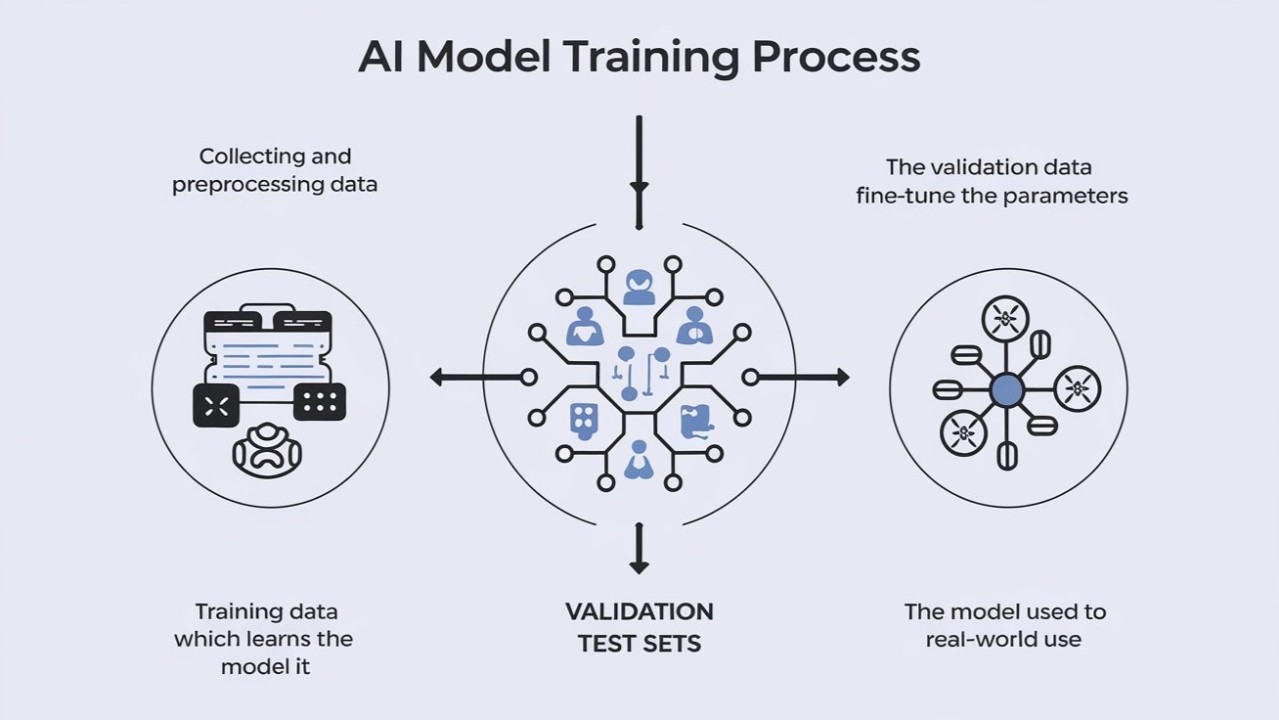
Step 1: Data Collection 
AI first needs data — lots of it. This could be:
-
Images (for face recognition)
-
Text (for chatbots like ChatGPT)
-
Audio (for voice assistants)
-
Numbers (for predictions)
The more quality data, the better AI learns.
Step 2: Training the Model 
AI uses algorithms (like neural networks) to analyze data.
It looks for patterns and relationships.
Example:
If you show AI 10,000 pictures of cats, it learns:
-
Cats have ears
-
Cats have whiskers
-
Cats have specific shapes
Eventually, it can identify a cat in a new image.
Step 3: Making Predictions 
Once trained, AI can:
-
Recognize faces
-
Translate languages
-
Recommend videos
-
Answer questions
It uses what it learned to make intelligent guesses.
Step 4: Improving with Feedback 
AI improves over time by:
-
Correcting mistakes
-
Learning from new data
-
Adjusting internal parameters
This process is called machine learning.
Simple Analogy 
AI learning is like teaching a child:
-
Show examples → Child learns patterns
-
Correct mistakes → Child improves
-
Practice more → Child becomes smarter
Same with AI.